Each customary oriental sword stands a magnificent display of technique, but what if you seek to express your own mode? Adjusting your gear is a rewarding journey, allowing you to fashion a truly distinctive piece. From the shaft wrapping and habaki to the protector design and heat mark, each aspect offers a chance for tailored look. This investigation delves into the sphere of katana refinements, providing details for both starters and well-versed enthusiasts wanting to imprint their stamp on the historic art of the samurai.
Novice's Verified Craftsmanship
For enthusiasts ready to embark on the advantageous journey of samurai sword fighting , 1060 steel katanas furnish an first-rate entry point. This particular grade of carbon steel meets a optimal point between budget-friendliness and performance . While never as hard as top-tier steels, 1060 facilitates a fair level of fine tuning , making it beneficial for beginners to practice the core principles of edge management and value the appeal of classic Japanese weaponry. It’s a first-rate choice for obtaining experience without the economical burden of more enhanced steels.
Grade T10 Cutlasses: Combining Potency and Value
Catering to devotees seeking an authentic armament experience without overwhelming the capital constraint , T10 substance katanas represent a beneficial option. These daggers offer a marked improvement in resilience compared to less expensive alternatives, exhibiting good edge retention and sufficient flexibility for rudimentary slashing techniques. While not rivaling the eminent characteristics of advanced steels like T100 or folded material , T10 provides a worthwhile blend of functionality and profitability, making them a appreciated choice for rookies and those on a fixed financial .
Beyond the Sharpness : Adjusting Your Blade's Hardware and Hold
Though the refined edge is undeniably the essential point of a katana, truly boosting its presence lies in the careful customization of its elements and hilt . This process allows owners to reveal their unique design . Explore the sweeping possibilities: menuki - decorative accents that enhance visual attraction ; the hamon wrappings – often elaborately crafted ; the tsuka essence itself, wrapped in authentic ito binding ; and the fusa end piece , which can be constructed from various components like valuables or ivory .
- Prefer designs that resonate with you.
- Explore with different ingredients .
- Prioritize excellence for a durable effect .
The Allure of the Katana: History, Craftsmanship, and Steel
This traditional armament exhibits a unique allure, steeped in epochs of Asian history and culture . More than merely a contraption of battle , it's a token of the champion ethos – a fusion of artistry and regulation . Its maturation spanned score generations, with early swords evolving into the sleek curvature and sharp edge we understand today. The artistry involved is truly exceptional , requiring ages of coaching to complete. The process involves a intricate folding of forged iron , creating layers that reinforce the steel’s flexibility and cutting ability. Various schools of metalworking originated , each with their specific secrets and procedures for achieving the exceptional steadiness and sharpness - a truly laborious pursuit.
- Initial Katana models
- The purpose of the samurai blade in fighter class culture
- Heritage blacksmithing systems
Electing the Suitable Steel for Your Oriental Blade Project: 1060 vs. T10
Electing the fitting steel is decisively important for any weapon project, and the judgment between 1060 and T10 can be tough. 1060 is a prevalent American compound, offering a fair balance of toughness and hardiness, providing it fairly easy to temper. However, T10, a Japanese steel, commonly boasts amplified wear fortitude and can likely achieve a increased peak hardness, although it can be considerably demanding to apply and requires detailed heat forging. Consider your competency and projected outcomes: for a trainee, 1060 may be a safer launchpad, while the seasoned smith might favor the increased traits of T10.
- Facility of Processing
- Edge
- Maximum Tenacity
Accessing Excellence: Progressive Katana Alteration Approaches
Refining the technique of katana adjustment extends far beyond basic polishing. Serious connoisseurs are now examining advanced techniques to truly unlock a blade's hidden potential. This comprises intricate work with the temper pattern, utilizing specialized compositions for differential strengthening and carefully choosing the outline of the protector to optimize balance and performance. Beyond purely functional refinements, artisans are increasingly focused on creating unparalleled aesthetic elegance, through complex carving and layered glazes that truly transform a katana into a showpiece.
From Elemental Metal to Artistry: Forging a 1060 Blade
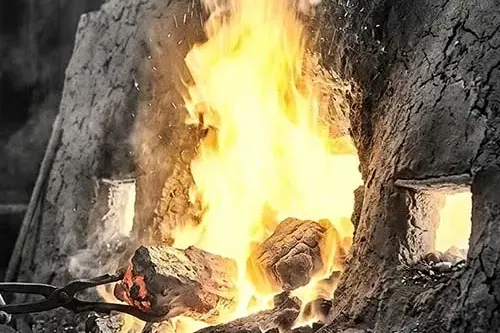
The journey launches with typical 1060 fabrication , a durable material far absent the beautiful katana katana it will mature into . Experienced bladesmiths carry out a intricate process of integrating and constructing the unrefined steel, repeatedly tempering it and pounding it to rid impurities and create a steady grain structure. This arduous process, often enduring for stretches , builds the important toughness and suppleness characteristic of a standard Japanese weapon . Extra heat refinements, including controlled hardening and conditioning , are mandatory to achieve the intended steadiness of sharpness, persistence and magnificence.- Layering: Minimizes impurities and constructs grain structure.
- Constructing: Forms the steel into the initial blade form.
- Quenching: Controls the final hardness and flexibility.
The Persistent Magnetism of the Katana: Thorough Examination of Alloy and Modification
That time-honored katana lasts a powerful symbol for Japanese artistry , its charm far outshining mere artillery . Forged from traditional steel and usually featuring intricate designs , the method of creation itself is a revered art. Beyond the core craftsmanship, the ability to modify a katana - from the temper curve to the haft wrapping and clasp - opens for a sincerely individual communication for both supporters and operators alike. This union of legacy steelwork and boundless personalization effectuates the katana's continued prestige across the terra .