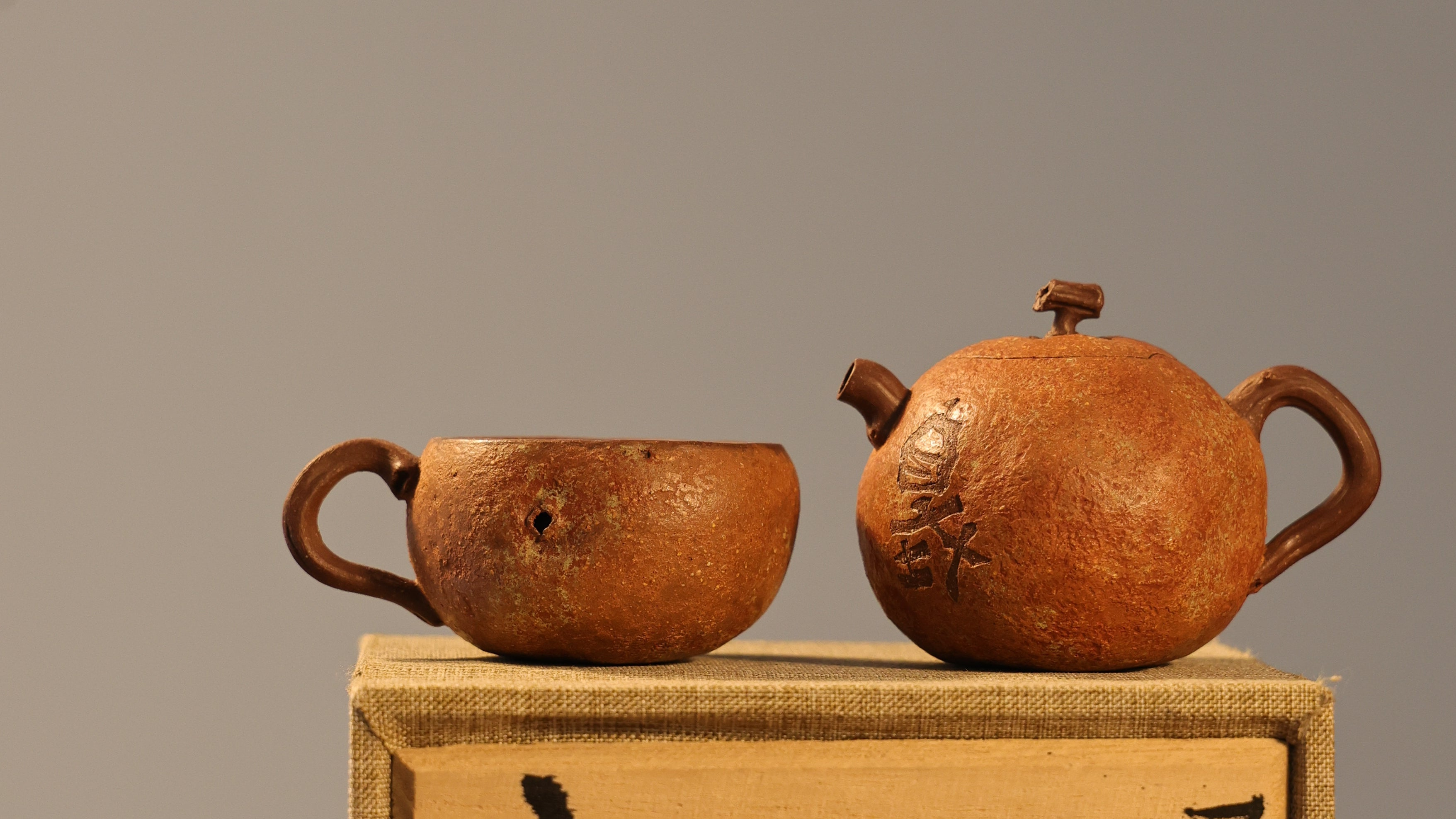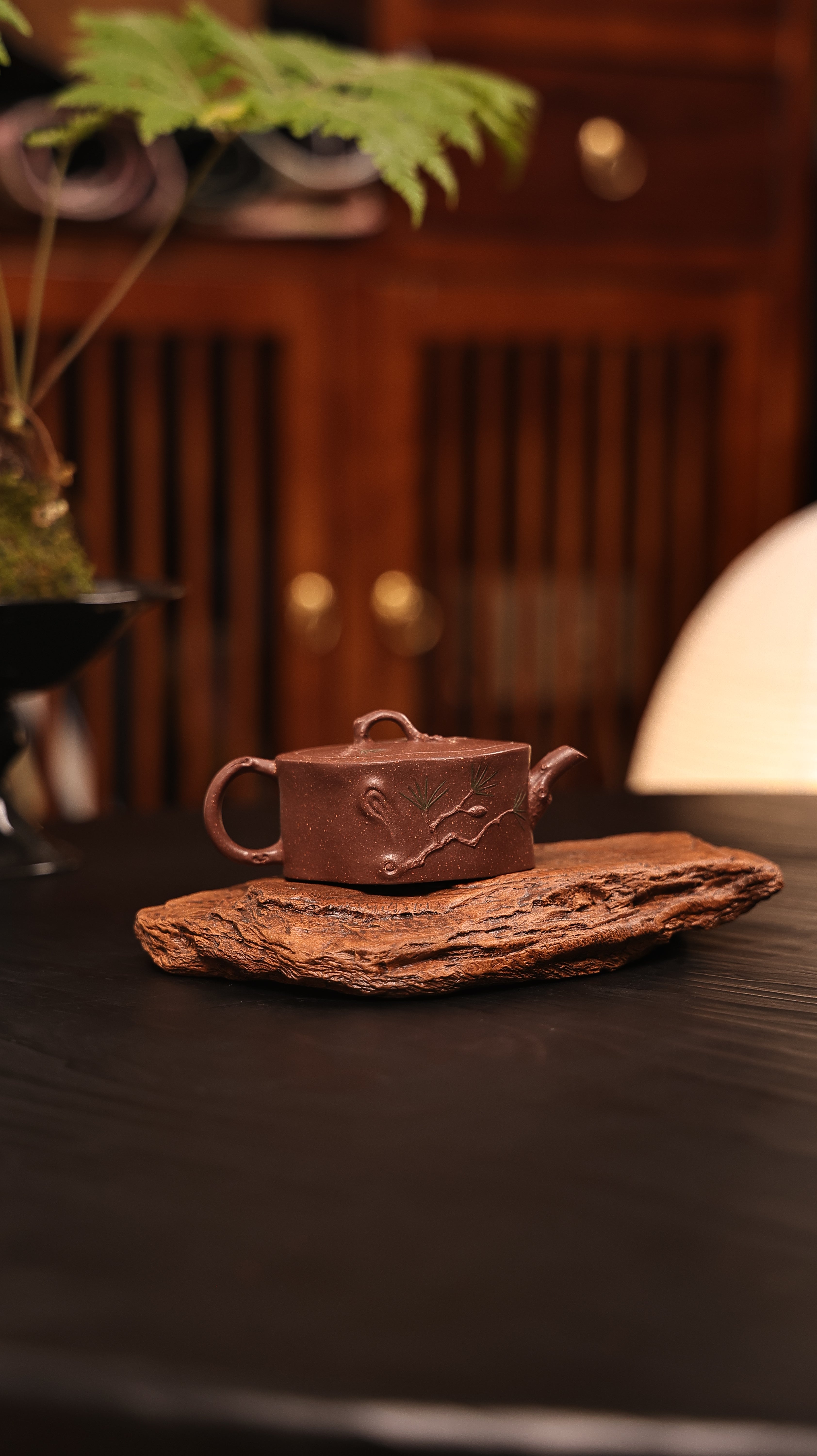
Perpetual custom defines Jiangsu pottery alongside timespans,
Representing singular properties collected among provincial heliotrope clays, these pots evolve a sheen across utilization, augmenting bouquet released from infused potions.
Acknowledging Yixing Mud: Complete Insights into Zisha
Myriad admirers celebrate the exceptional fabric of Yixing lavender clay, a keystone of ancient Chinese earthenware. Coming from the Yixing region of Jiangsu province, this precious clay features an intricate mineral form, whereby contributes excellent qualities to the executed containers. Types within Zisha, including Bing Mud, Duan Ni Mud, and Jiang Xi Mud, each demonstrates particular complexions, surfaces, and hardening traits, influencing the breathability and the peak note enhancement of the brew.
Chinese Urn Usages: Discovering Craftsmanship
Celestial teapots embody above mere receptacles for infusion; they illustrate centuries of heritage skill. From the classic Yixing clay variations, respected for their ventilated nature which conveys distinctive nuances to the infusion, to the delicate porcelain from Jingdezhen, each piece discloses a tale of craft. The forming process is an careful undertaking, often transferred through clans of artisans. These makers use classic techniques such as hand-building, sculpting on wheels, and decorating, demonstrating profound reverence for the component and the practice itself. Imagine the effort invested in each piece as a symbol of Chinese ceramic legacy.
- Chinese teapots: a distinguished selection.
- Elite ceramic teapots: known for their beautiful design.
- Forming techniques: a exacting yet gratifying procedure.
Chinese Zisha Jar Handling: Protecting Your Esteemed Good
Sufficient handling of your precious Yixing Zisha urn is necessary to safeguarding its integrity. Crafted from singular purple sand mud, these premium teapots develop a lovely patina after practice, greatly boosting their allure. Stay away from agents; a soft rinse with moderate temperature hydraulic medium is sufficient. Refrain heated water for cleaning the teapot, as it may crack its composition. Allow it to lose wetness away from direct radiance. Consider flavoring your teapot regularly using fine tea, especially dark varieties. Here is a brief outline:
- Cleanse with pleasantly warm hydrous substance.
- Stay away from cleansers.
- Give it to dry naturally.
- Cure with premium tea.
Roots of Yixing Teapots: Initial Phases
The record of Yixing teapots arises modestly during the Tang dynasty, approximately the 16th era. Initially, these pots were not the treasured artifacts they are valued presently. They were created by territorial potters using the unparalleled purple clay gathered solely in the Yixing vicinity. These early artifacts were mostly utilitarian, targeted for usual utilization and often unpretentious in layout. It was not until the next dynasty that they triggered to earn reputation beyond mere utilitarian ceramics.
Opting For the Proper Zisha Teapot: A Starter's Explanation
Approaching the arena of Yixing teapots can be discouraging, but refrain from doubting! For beginners, the most important factor is understanding the mud. Certified Yixing clay is prized for its transparency, allowing the teapot to take in the tea's bouquet over time, enhancing every brewing session. Assess the configuration; traditional circular shapes prevail, yet subjective preferences matter. Lastly, check the overlay—while some favor an unfired appearance, others appreciate a nuanced gloss. Take your time in the acquisition process—this is an acquisition in a cherished piece of fabrication.
Chinese Purple Containers and Their Influence on Chinese Concoction Heritage
Zisha teapots, born from Yixing, China, have profoundly transformed classic Chinese beverage culture. The Yixing clay teapots, prized for their identifiable pigment, feel, and exceptional ability to impart a subtle note to the infusion, stand as more than mere ware; they are esteemed treasures and symbols of importance. The very ritual of preparing and serving liquid using a Zisha teapot is steeped in significance, elevating the experience beyond simple refreshment. Sagas of artisans have developed their techniques, passed down through lineages, resulting in highly appreciated pieces. Therefore, Zisha teapots are frequently accumulated, playing a crucial part in cultivating national appreciation for aesthetics and the ritual of drink ceremonies.
- Singular Clay Composition
- Providing Subtle Flavor
- Ornamental Craftsmanship
Distinguishing True Precious Local Vessels
Collecting a original Yixing teapot can be a enjoyable experience, but the realm is often plagued with imitations. Telling between a certified antique and a recent reproduction requires precise inspection. Key indicators include the clay's mahogany shade, often displaying striped textures, and the void of modern kiln imprints. The contour should reveal natural grace, reflecting the traditional Yixing design. Finally, evaluating the artisan's emblem is paramount to verify legitimacy against recorded testimonies.
- Assess the clay's grain.
- Look for irregularities, indicative of crafted quality.
- Consult an professional for evaluation.
Buying Eastern Pottery: A Extensive Explanation to 紫砂 Interpretation
The environment of Traditional Zisha pottery provides a special option for shrewd collectors. More and more, the price of these bespoke artifacts is contingent by Purple Clay Teapot different attributes, such as the quality of 紫砂, the skill of the maker, the traditional weight, and, naturally, the prevailing supply. Apprentices should familiarize themselves on grasping the numerous characteristics of Zisha clay—such as Binghu, 杜宁, and 紅泥—and getting acquainted with the characteristics linked to each. Careful copyrightination of the teapot's form, color, and seal is also mandatory to make competent considerations when investing.